

AZELAIC ACID: MEET THE INGREDIENT DERMATOLOGISTS WON’T STOP TALKING ABOUT…
If you’re dealing with breakouts, stubborn dark spots, redness, uneven texture—or somehow all four at once—there’s one skincare ingredient worth putting on your radar: azelaic acid.
Often described as a multitasking skincare hero, azelaic acid has quietly earned its place in routines designed to target acne, post-breakout marks, uneven skin tone and visible redness without needing a complicated 10-step routine.
And unlike some of the trendier ingredients dominating social media, azelaic acid isn’t exactly new. It has been used in dermatology for years, making it one of those ingredients that combines clinical credibility with everyday skincare appeal.
So, what makes it so special?
WHAT EXACTLY IS AZELAIC ACID?
Azelaic acid is a naturally occurring dicarboxylic acid that has become a popular skincare ingredient because of its multiple skin benefits.
Think of it as the ingredient that doesn’t want to do just one job.
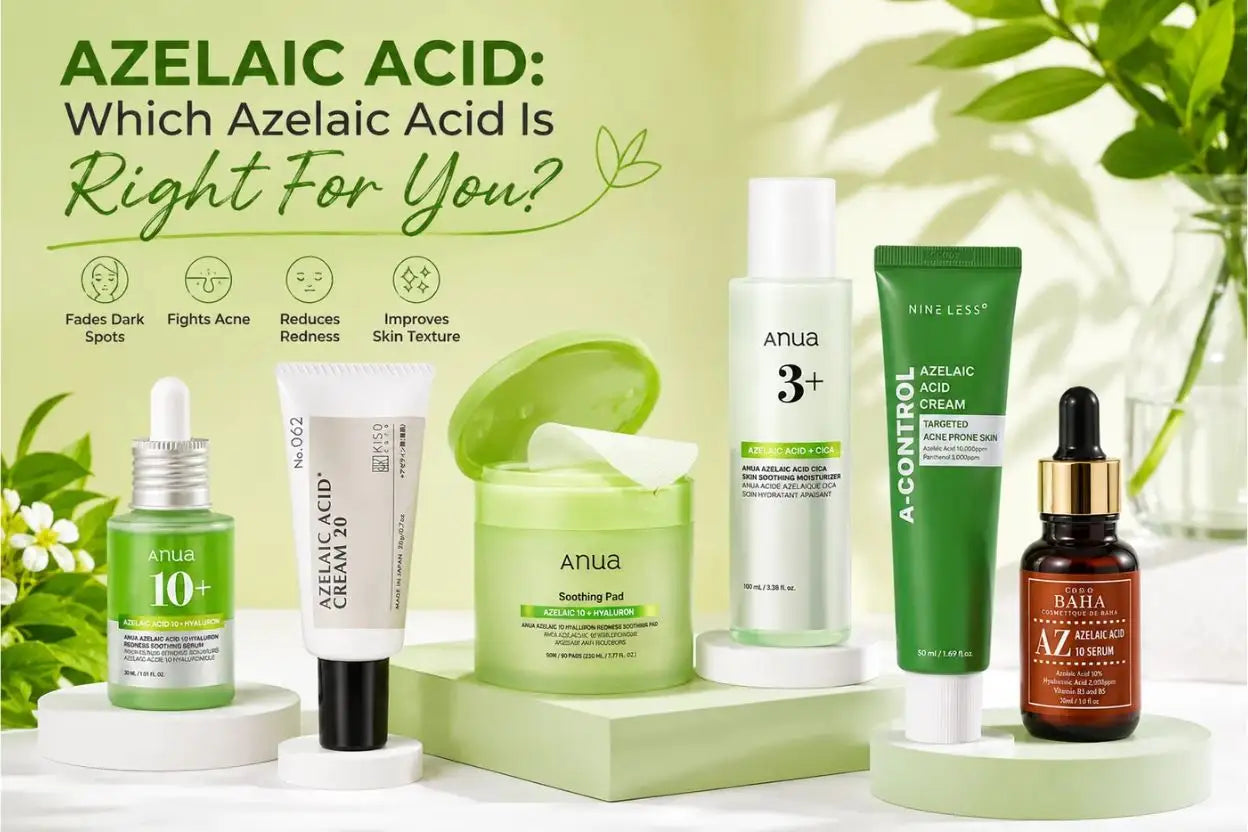
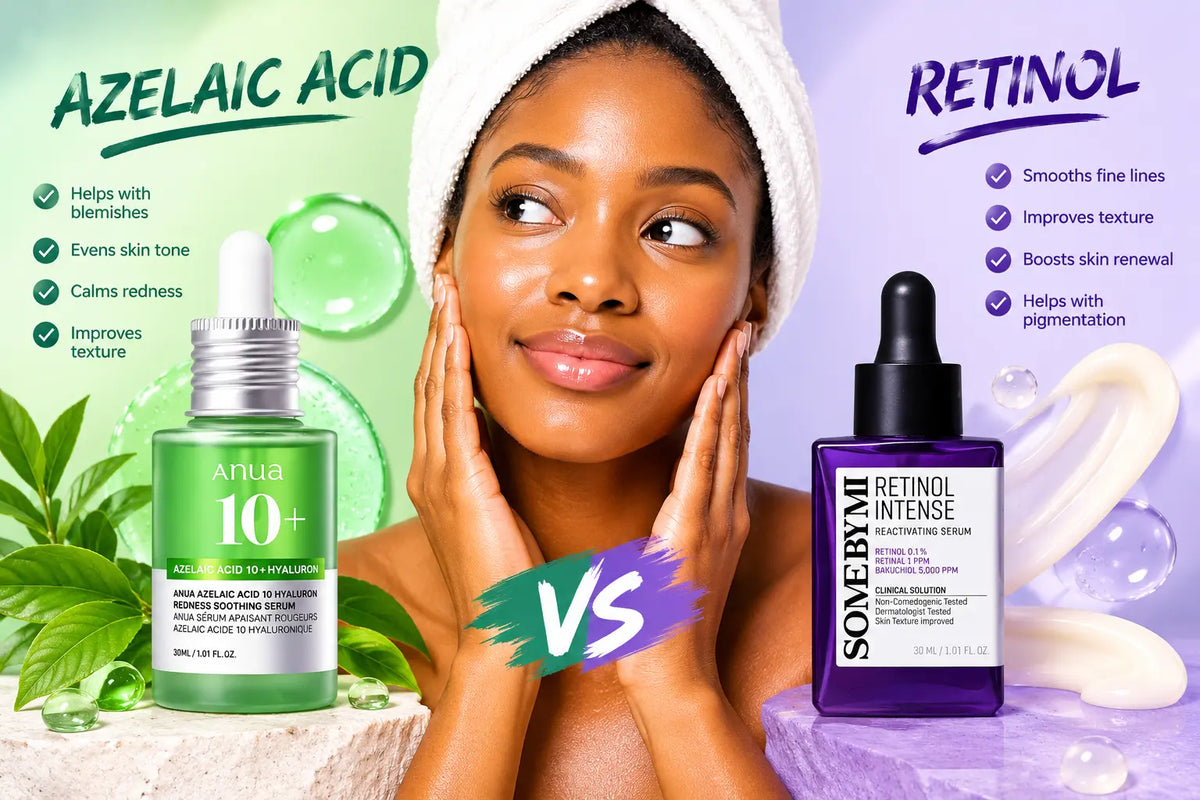
It can help address the appearance of blemishes, post-acne marks, uneven tone and redness, making it particularly appealing if your skin seems to have several concerns at the same time.
WHY IS AZELAIC ACID DIFFERENT FROM OTHER ACIDS?
The word "acid" can make azelaic acid sound like another aggressive exfoliating ingredient—but it isn't quite that simple.
AHAs such as glycolic acid and lactic acid are primarily known for exfoliating the skin's surface, while salicylic acid is oil-soluble and particularly useful for penetrating into pores.
Azelaic acid works differently.
Its appeal comes from its ability to address multiple pathways involved in common skin concerns, making it a particularly versatile ingredient for people who want to target blemishes and uneven tone while keeping their routine relatively simple.
WHY IS EVERYONE TALKING ABOUT IT?
Because azelaic acid is a multitasker.
✨ 1. IT HELPS WITH BREAKOUT-PRONE SKIN
Azelaic acid is well known for its role in acne-focused skincare. It can help keep pores looking clearer and support a smoother-looking complexion.
If you experience occasional breakouts, clogged pores or blemishes, it can be a useful ingredient to introduce into your routine.
✨ 2. IT TARGETS THE LOOK OF DARK SPOTS
One of the reasons azelaic acid has become so popular is its ability to target uneven-looking pigmentation.
That makes it especially interesting for people dealing with the marks that linger after a breakout has disappeared.
Because yes—the pimple may be gone, but the dark mark sometimes decides to stay for the after-party. 😅
✨ 3. IT HELPS CREATE A MORE EVEN-LOOKING COMPLEXION
Uneven tone can come from many factors, including blemishes and excess pigmentation.
Azelaic acid can be incorporated into a routine focused on achieving a brighter, more balanced-looking complexion without relying on an overloaded collection of active ingredients.
✨ 4. IT'S A FRIENDLY OPTION FOR REDNESS-PRONE SKIN
Azelaic acid is also loved for its soothing properties, making it an ingredient worth considering if your skin frequently looks flushed, irritated or uneven.
That said, even gentle actives can cause irritation when introduced too quickly—so your skin still deserves a slow-and-steady approach.
AZELAIC ACID FOR DIFFERENT SKIN CONCERNS
AZELAIC ACID FOR ACNE-PRONE SKIN
If blemishes are your main concern, azelaic acid can complement a simple acne-focused routine.
The key is not to overwhelm your skin by combining several powerful actives at once. A cleanser, azelaic acid treatment, moisturizer and sunscreen can be a much better starting point than layering every trending ingredient.
AZELAIC ACID FOR DARK SPOTS
Post-breakout marks can be one of the most frustrating parts of having acne-prone skin.
Azelaic acid can be particularly useful in routines focused on fading the appearance of lingering pigmentation and creating a more even-looking skin tone.
And don't forget sunscreen—daily UV protection is essential when pigmentation is one of your main concerns.
AZELAIC ACID FOR REDNESS
Azelaic acid is also a popular choice for routines targeting visible redness.
If your skin looks easily irritated or uneven, combine it with gentle cleansers, soothing ingredients and a barrier-supporting moisturizer rather than creating a routine packed with exfoliating actives.
AZELAIC ACID FOR UNEVEN SKIN TONE
Dullness, post-breakout marks and pigmentation can all contribute to an uneven-looking complexion.
Azelaic acid can be incorporated into a brightening routine without making your skincare shelf unnecessarily complicated.
WHAT PERCENTAGE OF AZELAIC ACID SHOULD YOU USE?
You'll find azelaic acid in different concentrations, depending on the product and whether it is a cosmetic or dermatological formulation.
A 10% azelaic acid product is a popular starting point in over-the-counter skincare and can be a convenient way to introduce the ingredient into your routine.
Higher concentrations are also available, particularly in dermatological treatments.
The important thing isn't simply choosing the highest percentage. The best formula is one your skin can tolerate and that you can use consistently.
HOW LONG DOES AZELAIC ACID TAKE TO WORK?
This is where patience becomes your skincare superpower.
Azelaic acid isn't a magic eraser that changes your skin overnight. Improvements can take several weeks of consistent use, and pigmentation often takes longer to visibly improve than temporary blemishes.
Instead of constantly switching products, give your routine time to work.
Consistency > constantly chasing the next viral ingredient.
CAN AZELAIC ACID BE USED EVERY DAY?
For many people, yes—but how often you use it should depend on your skin and the specific formulation.
If you're new to azelaic acid, start gradually. Using it a few times per week allows you to see how your skin responds before increasing frequency.
If your skin becomes excessively dry, irritated or uncomfortable, reduce how often you use it and simplify your routine.
WHAT CAN YOU PAIR WITH AZELAIC ACID?
Azelaic acid works beautifully alongside a simple, hydration-focused skincare routine.
GREAT PAIRINGS INCLUDE:
Hyaluronic Acid – helps support skin hydration.
Ceramides – help support the skin barrier.
Centella Asiatica – a popular soothing ingredient for calming-focused routines.
Niacinamide – can complement routines targeting uneven tone, oiliness and the appearance of blemishes.
Sunscreen – absolutely essential, especially when your goal is improving the appearance of pigmentation.
WHAT SHOULD YOU BE CAREFUL ABOUT WHEN USING AZELAIC ACID?
Azelaic acid may be gentler than some stronger exfoliating ingredients, but that doesn't mean your skin can't become irritated.
When introducing it:
- Start slowly.
- Avoid introducing several new actives at the same time.
- Keep your skin moisturized.
- Wear sunscreen every morning.
- Pay attention to how your skin responds.
- Reduce frequency if irritation develops.
If you're already using strong exfoliating acids or retinoids, introduce azelaic acid carefully rather than immediately layering everything together.
AZELAIC ACID VS. OTHER POPULAR SKINCARE ACTIVES
AZELAIC ACID VS. SALICYLIC ACID
Salicylic acid: Particularly popular for oily, congested and blemish-prone skin because it can penetrate into pores.
Azelaic acid: More of a multitasker, especially interesting for blemishes, post-breakout marks, uneven tone and visible redness.
AZELAIC ACID VS. GLYCOLIC ACID
Glycolic acid: An AHA primarily known for surface exfoliation and improving the appearance of texture and dullness.
Azelaic acid: Less focused on traditional exfoliation and more versatile for routines targeting blemishes, pigmentation and redness.
AZELAIC ACID VS. NIACINAMIDE
These two don't necessarily have to compete.
Niacinamide is known for supporting the skin barrier, hydration, oil balance and the appearance of uneven tone, while azelaic acid brings additional benefits for blemish-prone and redness-prone skin.
They can be complementary ingredients when formulated and introduced appropriately.
WHO SHOULD CONSIDER AZELAIC ACID?
Azelaic acid may be particularly interesting if you're dealing with:
✓ Frequent blemishes
✓ Post-acne marks
✓ Uneven-looking pigmentation
✓ Visible redness
✓ Uneven skin tone
✓ Dull or rough-looking skin
Its versatility is what makes it so appealing.
Instead of having one product for every concern, azelaic acid can become one of the hardworking ingredients at the centre of a streamlined skincare routine.
THE AZELAIC ACID GLOW SECRET
The beauty of azelaic acid is its versatility.
Whether your biggest concern is breakouts, post-acne marks, uneven tone or visible redness, this hardworking ingredient can earn a place in your routine.
And you don't need a complicated routine to make it work.
Start with one product. Introduce it gradually. Keep your skin hydrated. And never skip sunscreen.
Because great skin isn't about using everything—it's about using the right ingredients consistently.
READY TO MEET YOUR NEW SKINCARE FAVOURITE?
Azelaic acid may just be the multitasking ingredient your routine has been waiting for.
Shop Glow Secret's azelaic acid skincare collection and find the formula that fits your skin goals

Leave a comment
This site is protected by hCaptcha and the hCaptcha Privacy Policy and Terms of Service apply.