
Article: Dehydrated Skin vs Dry Skin: What's the Difference and How to Treat Each
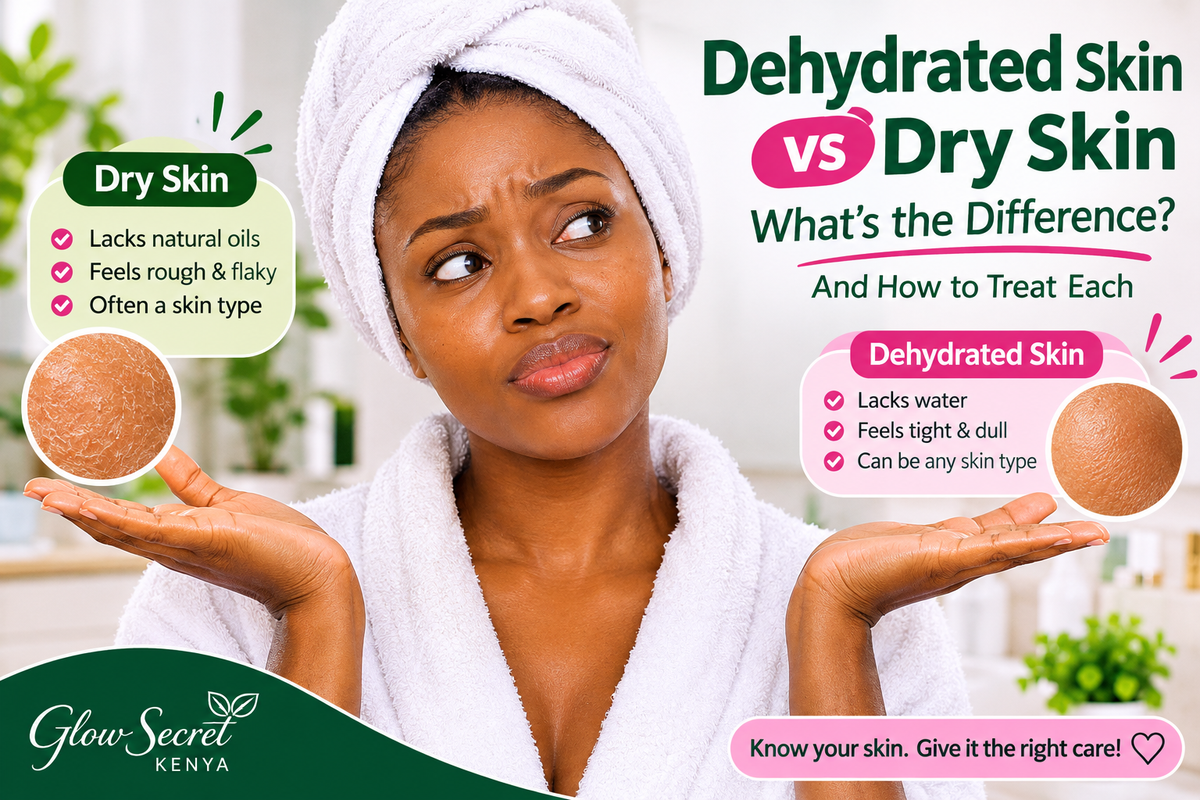
Dehydrated Skin vs Dry Skin: What's the Difference and How to Treat Each
Does your face sometimes feel tight, look dull or appear flaky even after applying moisturizer? You might be dealing with dry skin, dehydrated skin or a combination of both.
Although these terms are often used interchangeably, dehydrated skin and dry skin are not exactly the same. Understanding the difference can help you choose the right skincare products instead of spending money on products that do not address what your skin needs.
So, how can you tell whether your skin is dry or dehydrated?
In this guide, we'll explain the differences, common signs to look out for, ingredients worth considering and simple skincare routines for both conditions.
What Is Dry Skin?
Dry skin is generally a skin type characterised by lower levels of natural oil (sebum). Sebum helps keep the skin soft and supports its protective outer barrier.
When your skin produces less oil, it may struggle to maintain a comfortable, smooth surface.
Common signs of dry skin include:
-
Rough or flaky texture.
-
A tight feeling, especially after washing.
-
Dull-looking skin.
-
Visible dry patches.
-
Itching or irritation.
-
Skin that feels uncomfortable throughout the day.
Dry skin can affect the face and body. Some people naturally have dry skin, while others experience increased dryness because of weather, age, harsh cleansers or certain skin conditions.
What Causes Dry Skin?
Several factors can contribute to dry skin:
1. Low natural oil production
Some people naturally produce less sebum, which can make their skin feel dry more frequently.
2. Harsh cleansers
Cleansers that are too stripping can remove some of the skin's natural oils, leaving it feeling tight and uncomfortable.
3. Hot showers
Frequent long, hot showers can strip the skin of natural oils and contribute to dryness.
4. Environmental conditions
Dry air, wind and air conditioning can contribute to moisture loss and make existing dryness more noticeable.
5. Skin conditions
Conditions such as eczema and psoriasis can cause persistent dryness, flaking and irritation.
What Is Dehydrated Skin?
Dehydrated skin is skin that lacks water. Unlike dry skin, which is generally associated with lower oil production, dehydration can affect any skin type.
That means you can have oily, combination or normal skin and still experience dehydration.
For example, your face may look shiny around the forehead and nose but still feel tight or uncomfortable.
Common signs of dehydrated skin include:
-
Tightness or discomfort.
-
Dull or tired-looking skin.
-
Fine lines that appear more noticeable.
-
Skin that feels less plump.
-
Makeup that settles into fine lines or looks patchy.
-
Oily-looking skin accompanied by a tight feeling.
Dehydration can be temporary and may be influenced by environmental conditions, skincare habits and inadequate moisture retention.
What Causes Dehydrated Skin?
1. Not enough hydration in your skincare routine
If your routine lacks hydrating ingredients, your skin may not get the additional water-binding support it needs.
2. Over-exfoliation
Using exfoliating acids or scrubs too frequently can irritate the skin and interfere with its protective barrier.
3. Harsh skincare products
Strong cleansers and irritating products can leave your skin feeling uncomfortable and contribute to moisture loss.
4. Environmental exposure
Sun exposure, wind, dry air and air conditioning can affect how hydrated your skin feels.
5. An impaired skin barrier
When the skin barrier is compromised, it may lose water more easily, making dryness and dehydration more noticeable.
Dehydrated Skin vs Dry Skin: What's the Difference?
The easiest way to understand the difference is to remember that dry skin is generally associated with a lack of oil, while dehydrated skin is associated with a lack of water.
Here is a simple comparison:
| Feature | Dry Skin | Dehydrated Skin |
|---|---|---|
| What it lacks | Natural oils | Water |
| Skin type or condition | Generally a skin type | A condition that can affect any skin type |
| Common feeling | Rough, flaky and tight | Tight, less plump and uncomfortable |
| Appearance | Dry patches and rough texture | Dullness and more noticeable fine lines |
| Common skincare focus | Emollients and barrier-supporting moisturizers | Hydrating ingredients and moisture retention |
| Can oily skin experience it? | Less commonly described as a dry skin type | Yes |
Important: These are general clues, not a medical diagnosis. Dry skin can also be dehydrated, and the signs can overlap.
How to Tell Whether Your Skin Is Dry or Dehydrated
Sometimes, looking at your skin and noticing how it feels can provide useful clues.
Signs Your Skin May Be Dry
-
Your skin frequently feels rough.
-
You notice flaky or scaly patches.
-
Your face feels tight after cleansing.
-
Your skin often needs a richer moisturizer.
-
Your skin feels dry even when you are not using active treatments.
Signs Your Skin May Be Dehydrated
-
Your skin feels tight but also looks oily.
-
Your complexion appears dull.
-
Fine lines seem more noticeable when your skin is feeling dry.
-
Your makeup does not sit smoothly.
-
Your skin feels less comfortable despite having an oily T-zone.
If you are experiencing several of these signs, you may have both dry and dehydrated skin.
Best Skincare Ingredients for Dry Skin
If your skin is naturally dry, look for ingredients that soften the skin, support the skin barrier and help reduce moisture loss.
1. Ceramides
Ceramides are lipids naturally found in the skin barrier. Skincare products containing ceramides can help support the barrier and maintain moisture.
2. Shea Butter
Shea butter is an emollient that helps soften rough skin and is commonly used in richer moisturizers.
3. Squalane
Squalane is an emollient ingredient that helps soften the skin and improve its feel without necessarily creating a heavy texture.
4. Fatty Acids
Fatty acids are lipids that help support the skin barrier. They are often included in moisturizers formulated for dry skin.
5. Petrolatum
Petrolatum is an occlusive ingredient that helps reduce water loss from the skin's surface. It can be useful for particularly dry areas.
Best Skincare Ingredients for Dehydrated Skin
For dehydrated skin, focus on humectants that attract and hold water, alongside a moisturizer that helps reduce moisture loss.
1. Hyaluronic Acid
Hyaluronic acid is a popular humectant that helps attract and hold water in the outer layers of the skin.
It is commonly found in hydrating serums, toners and moisturizers.
2. Glycerin
Glycerin is a well-established humectant that helps draw water into the outer layers of the skin.
It is suitable for many skin types and appears in a wide range of skincare formulations.
3. Panthenol
Panthenol, also known as provitamin B5, helps condition the skin and is commonly used in hydrating and soothing skincare products.
4. Aloe Vera
Aloe vera is used in skincare formulations to help condition and moisturize the skin. Its lightweight texture makes it popular in gels and hydrating products.
5. Beta-Glucan
Beta-glucan is a moisturizing ingredient used in skincare to help condition the skin and support hydration.
Can You Have Dry and Dehydrated Skin at the Same Time?
Yes! In fact, the two can occur together.
For example, someone with naturally dry skin may also experience dehydration after using harsh cleansers, over-exfoliating or spending time in dry environments.
This means your routine may need both hydration and richer moisturizing products.
A hydrating serum containing glycerin or hyaluronic acid can help attract water, while a moisturizer containing ceramides, emollients or occlusive ingredients can help maintain skin comfort and reduce moisture loss.
The goal is not to choose hydration or moisturization exclusively. It is to understand what your skin needs and combine suitable products.
Skincare Routine for Dry Skin
If your skin is naturally dry, focus on gentle cleansing, richer moisturizing textures and consistent sun protection.
Morning Routine
Step 1: Use a gentle cleanser
Choose a cleanser that removes dirt and impurities without leaving your skin feeling stripped.
Step 2: Apply a hydrating serum
A serum containing glycerin or hyaluronic acid can add hydration to your routine.
Step 3: Apply a richer moisturizer
Look for creams containing ceramides, shea butter or other emollient ingredients.
Step 4: Apply sunscreen
Finish with broad-spectrum SPF 30 or higher to protect your skin from UV exposure.
Evening Routine
Step 1: Cleanse gently
Remove sunscreen, makeup and daily buildup without over-cleansing.
Step 2: Apply a hydrating product
Use a suitable hydrating serum or essence if needed.
Step 3: Moisturize
Apply a richer moisturizer to help keep your skin comfortable overnight.
Skincare Routine for Dehydrated Skin
If your skin feels tight, dull or less plump, focus on adding hydration while supporting the skin barrier.
Morning Routine
Step 1: Gentle cleansing
Avoid harsh cleansers that leave your face feeling tight.
Step 2: Apply a hydrating toner or serum
Look for ingredients such as hyaluronic acid, glycerin or panthenol.
Step 3: Apply moisturizer
Use a moisturizer suited to your skin type. Oily or combination skin may prefer a lightweight cream or gel, while dry skin may need something richer.
Step 4: Apply sunscreen
Use broad-spectrum SPF 30 or higher every morning.
Evening Routine
Step 1: Cleanse
Gently remove sunscreen, makeup and impurities.
Step 2: Hydrate
Apply a hydrating serum or essence.
Step 3: Moisturize
Finish with a suitable moisturizer to help reduce water loss overnight.
Avoid introducing several new active ingredients at once. If your skin is irritated, simplify your routine until it feels comfortable.
Products to Explore at Glow Secret Kenya
Once you understand whether your skin needs more hydration, richer moisturization or both, choosing products becomes easier.
Here are some options available at Glow Secret Kenya.
1. COSRX Hyaluronic Acid Intensive Cream

Best for: Skin that needs additional hydration and a richer cream texture.
This moisturizer contains hyaluronic acid and is worth exploring if your skin feels tight or needs additional moisture.
2. AESTURA Atobarrier365 Cream

Best for: A routine focused on skin barrier support.
This cream is an option for people looking to include a barrier-focused moisturizer in their routine.
3. Purito Seoul Mighty Bamboo Panthenol Cream

Best for: People interested in panthenol-based skincare.
Panthenol is commonly used in skincare to help condition and moisturize the skin. This cream is worth exploring if you want to add a panthenol-focused product to your routine.
4. Hada Labo Gokujyun Premium Emulsion

Best for: A hydrating step in a skincare routine.
Hada Labo's Gokujyun range is known for its hyaluronic-acid-focused formulations. An emulsion can be a useful layer in a hydration-focused routine, depending on your skin type and preferred texture.
5. Dr. Althea 345 Relief Cream

Best for: People looking for a moisturizer to add to a simple skincare routine.
This is another option to consider when choosing a moisturizer. Check the full ingredient list and product directions to make sure it suits your skin.
Common Skincare Mistakes to Avoid
Whether your skin is dry, dehydrated or both, certain habits can make it harder to maintain a comfortable skincare routine.
1. Over-exfoliating
Using too many exfoliating products can irritate the skin and affect its protective barrier.
2. Using harsh cleansers
A cleanser that leaves your face feeling tight may not be suitable for your skin.
3. Skipping moisturizer because your skin is oily
Oily skin can still be dehydrated. Choose a suitable lightweight moisturizer rather than automatically skipping this step.
4. Using too many products at once
Introducing several new products simultaneously can make it difficult to identify what works and what causes irritation.
5. Forgetting sunscreen
Sun exposure can contribute to skin damage and affect overall skin health. Make broad-spectrum sunscreen part of your morning routine.
Frequently Asked Questions
Is dehydrated skin the same as dry skin?
No. Dry skin is generally a skin type associated with lower natural oil production, while dehydrated skin refers to skin that lacks water. They can occur together.
Can oily skin be dehydrated?
Yes. Oily skin can lack water even when it produces excess sebum. This is why oily skin can look shiny but still feel tight or uncomfortable.
How do I know if my skin is dry or dehydrated?
Dry skin often feels rough, flaky and consistently tight. Dehydrated skin may look dull, feel tight and show more noticeable fine lines. These signs overlap, so they are not a definitive diagnosis.
What is better for dehydrated skin: serum or moisturizer?
They serve different purposes. A hydrating serum can provide humectant ingredients such as hyaluronic acid, while a moisturizer helps maintain skin comfort and reduce moisture loss. Many routines benefit from using both.
Can I use hyaluronic acid if I have dry skin?
Yes. Hyaluronic acid can be useful for dry skin too. Apply it as directed and follow with a suitable moisturizer to help maintain hydration.
How long does it take to improve dehydrated skin?
It depends on the cause and your routine. Some people notice improved skin comfort relatively quickly after adding suitable hydration and reducing irritating products. Persistent dryness or irritation may need professional assessment.
Should I moisturize oily but dehydrated skin?
Yes. Choose a lightweight moisturizer that suits your skin type. Hydration and moisturization are important even when your skin produces excess oil.
Give Your Skin the Care It Actually Needs
Understanding the difference between dry and dehydrated skin can help you make better skincare choices.
If your skin is dry, focus on richer moisturizers and ingredients that support the skin barrier. If it is dehydrated, consider adding humectants such as hyaluronic acid and glycerin, then follow with a suitable moisturizer.
And remember, your skin may need both hydration and moisturization.


Leave a comment
This site is protected by hCaptcha and the hCaptcha Privacy Policy and Terms of Service apply.